
Edited interview
Hear My Story
Dr. Lillian Bulah-Galloway discusses the family history and personal experiences behind The Fifth Case.
Edited interview · 4 minutes, 20 seconds · Fade to black
A Granddaughter’s Journey Through Brown v. Board and America’s Unfinished Promise
The Fifth Case is a work of creative nonfiction that brings together family biography, civil rights history, and educational psychology. Through the experiences of Fred and Sara Bulah and their daughter Shirley, Dr. Lillian Bulah-Galloway traces the Delaware desegregation struggle and its place in the legal history surrounding Brown v. Board of Education.
Drawing on family archives, historical records, and psychological inquiry, the book examines racial stress, identity formation, educational motivation, intergenerational trauma, resilience, and the continuing consequences of segregation. It restores the human experiences behind the court decisions while asking what educational equality means beyond a landmark ruling.
Forthcoming — Publication Details to Be Announced
Publication information will be shared when confirmed. The manuscript is under publisher review; no release date, ISBN, or purchase link is announced.
Before the Supreme Court ruling, there was a family willing to challenge segregation.
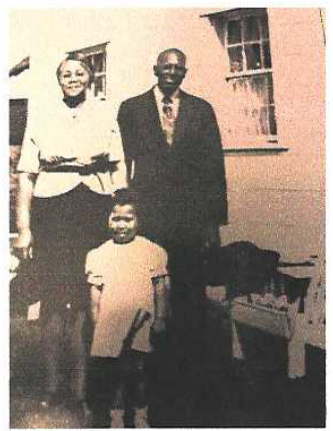
In Hockessin, Delaware, Fred and Sara Bulah raised their family in an era when racial segregation determined where Black children could attend school and what educational opportunities they could receive.
Their determination to secure an equal education for their daughter, Shirley Bulah, placed the family at the center of Bulah v. Gebhart, one of the Delaware school desegregation cases associated with the landmark 1954 Supreme Court decision, Brown v. Board of Education.
The Delaware litigation held a unique distinction among the five school desegregation cases brought before the United States Supreme Court in Brown v. Board of Education.
Delaware was the first and only one of the five cases in which the plaintiffs secured a state-court victory ordering school integration before the Supreme Court's historic 1954 ruling.
Chancellor Collins J. Seitz ruled in favor of the Black families in Belton v. Gebhart and Bulah v. Gebhart, ordering the admission of Black children to previously segregated white public schools.
This ruling established an important legal precedent at the state-court level, distinguishing Delaware's contribution to Brown v. Board of Education. Unlike the other cases, Delaware arrived at the Supreme Court with a victory for the families seeking educational equality.
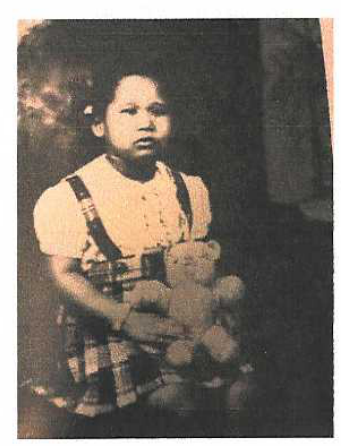
Shirley Bulah was more than a name in a legal proceeding. She was a young girl whose education became part of a national struggle for equal opportunity.
Following the Delaware court's decision, Shirley entered a previously all-white school in Hockessin. Her experience represents both the courage required of children confronting segregation and the psychological burdens they carried.
Through her aunt's story, Dr. Lillian Bulah-Galloway examines the effects of racial stress, vigilance, identity formation, and resilience on children navigating educational environments shaped by discrimination.
For Dr. Bulah-Galloway, this history is not simply a matter of legal precedent. It is the story of her grandparents, her aunt, and the generations who inherited both the consequences of segregation and the determination to overcome it.
Her work brings family archives, historical inquiry, and educational psychology together to explore how experiences of injustice, courage, faith, and resilience are remembered and transmitted across generations.
The Bulah family's legacy reminds us that the struggle for educational equality began long before the Supreme Court spoke—and that its psychological and educational consequences continue long afterward.
Educational Psychologist | Professor of Psychology | Author | Lecturer
Dr. Lillian Bulah-Galloway brings a distinctive interdisciplinary perspective to university lectures, academic conferences, educational forums, and historical commemorations.
As an educational psychologist, professor of psychology, and former New York City Department of Education school psychologist and mathematics teacher, she draws upon decades of professional experience in psychology and education.
Her scholarship explores racial stress, identity development, educational motivation, behavioral genetics, intergenerational trauma, and the psychological consequences of racial segregation.
As the granddaughter of Fred and Sara Bulah, plaintiffs in the Delaware school desegregation litigation associated with Brown v. Board of Education, Dr. Bulah-Galloway also brings a direct family perspective to one of America's defining civil rights struggles.
Her presentations connect historical evidence, psychological scholarship, and family memory to examine how educational inequality shapes children, families, and communities across generations.
Brown v. Board Through the Eyes of a Granddaughter
A historical, psychological, and personal examination of the landmark school desegregation decision.
Drawing upon her family's involvement in Bulah v. Gebhart, Dr. Bulah-Galloway explores the courage of the five plaintiff families, Delaware's distinctive legal victory, and the psychological consequences of segregation that extended far beyond the courtroom.
The presentation examines how racial stress, educational environments, identity development, and intergenerational experiences continue to shape the unfinished promise of Brown v. Board of Education.
Presentation length: Approximately 45–60 minutes, with opportunities for audience discussion.
Dr. Bulah-Galloway welcomes invitations from universities, colleges, historical institutions, professional associations, educational organizations, and community forums. Engagements may include keynote presentations, guest lectures, faculty seminars, moderated discussions, and interdisciplinary educational programs.
For speaking invitations and professional correspondence: contact@drlillianbulahgalloway.com
Please include your institution or organization, proposed event date, location, audience, and preferred presentation topic.
Speaking engagements are arranged by advance inquiry.
Dr. Lillian Bulah-Galloway discusses the family history and personal experiences behind The Fifth Case.
Edited interview · 4 minutes, 20 seconds · Fade to black